

19 January, 2026
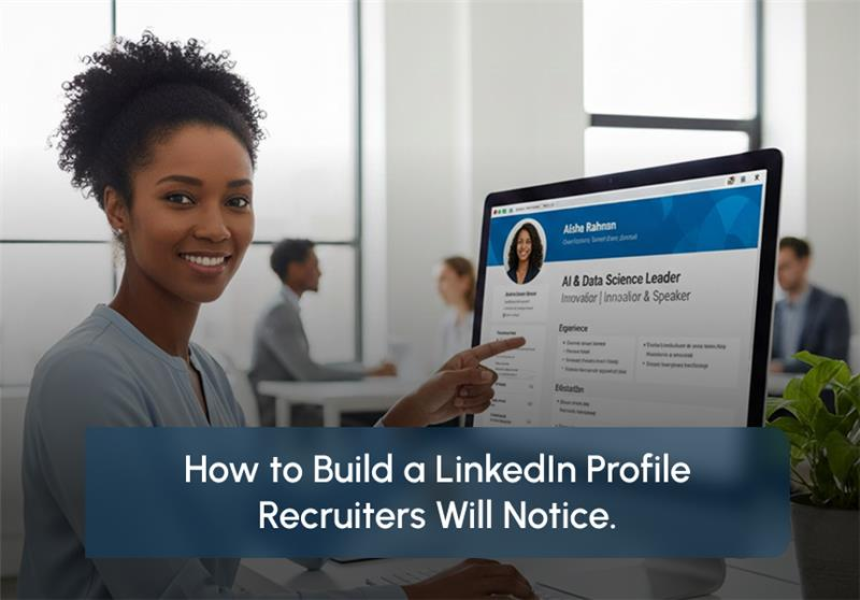
Your LinkedIn Profile Is Your First Impression—Make It Count
When was the last time you encountered someone intriguing? I take it that the conversation was simple? They paid attention. They were genuinely connected. You said to yourself as you walked away, "I need to talk to them again."That is precisely what your LinkedIn profile must achieve. However, for recruiters.
You can't just upload a digital resume and forget about it. A first impression is a living, breathing entity. A quiet conversation occurs while you're busy with your regular tasks. Having a profile is not the only objective. It is to construct one that murmurs, "Hey, over here," while leaning in. Let's have a conversation.
This has nothing to do with flashy tricks. It has to do with interpersonal connections. Let's create a profile that truly captures your personality.
Why Your LinkedIn Profile Matters More Than a Traditional Resume
That line under your name? Most people stuff it with job titles like "Senior Marketing Manager. "It's fine. But it's only a label.
Your headline is prime real estate. It should answer one question for a busy recruiter: "What do you do for people?"
- Label (The Old Way): "Digital Marketing Manager"
- Handshake (The New Way): "I help SaaS companies turn website visitors into loyal customers."
See the difference? One is a title. The other is a promise. It starts a story. It uses "I help" language, which is instantly more human. It shows your impact, not just your position. This is key for your job search profile.
The Headline Rule: Stop Writing Job Titles, Start Showing Value
This is the heart of your profile. Please don't just copy-paste your resume summary. That's like reading an obituary for your career, a dry list of facts about the past.
Your professional narrative is presented in your own words in the "About" section. Use "I" and "me" to write it in the first person. It seems more genuine.
Start with a powerful, eye-catching first sentence. At work, what superpower do you have? Talk about your motivation after that. What drives you to carry out your actions? Which problems do you like to solve? Add a few noteworthy achievements, but use them to illustrate your efforts. This is a core personal branding tip.
Finally, specify exactly what has to be done. "I'm always open to discussing new projects." Moreover, "Feel free to send me a message about opportunities in remote product design."
It seems approachable. It's an invitation to carry on the discussion. See our post on elevator pitch examples and career storytelling tips for additional advice on constructing this narrative.
How to Write an “About” Section People Actually Want to Read
Listing job duties is the biggest missed opportunity. Everyone has duties. Your results are important to recruiters.
Focus on the "so what?" rather than the "what" for each role.
- Prior to that: "In charge of social media account management."
- Next: "Grew Instagram followers in 6 months, which directly contributed to an increase in lead generation."
Use bullet points to make reading easier. Start each point with a powerful action verb, like "grew," "launched," "saved," "built," or "led," and make every effort to quantify. Numbers pop off the screen and prove your value.
This is where your profile stops being a fact sheet and starts being a proof sheet. To make this proof even stronger, consider how an online portfolio could showcase this work visually.
Experience Section Mistake: Listing Tasks Instead of Impact
The Skills section is not a dumping ground. Consider strategically. Use both technical skills (like "Google Analytics" or "Python") and soft talents (like "Team Leadership").
The true secret, though, is that suggestions are far more valuable than endorsements.
Social proof is a well-considered referral from a manager or coworker. It's another person attesting to your narrative. Don't be afraid to ask for one in a kind manner. Offer to write one in return. It’s a great way to network for a job authentically and build professional networking connections.
Skills Matter, But Proof Builds Trust
This is what makes you a person, not a profile. A complete profile is a credible profile. This is an important part of LinkedIn optimization.
- Profile Photo: Use a clear, friendly, recent headshot. Smile with your eyes.
- Background Photo: This blank canvas behind your profile pic? Use it! Put a simple graphic related to your industry, a calming workspace photo, or even a text overlay of your core motto.
- Featured Section: This is your trophy case. Link to that blog post you wrote, a major project, a case study, or a presentation. It adds depth and credibility. If you need a place to host these projects, our online portfolio tips can help you get started.
- Activity: Post an article along with a brief explanation of its significance. Honor a former colleague's new position. A little activity shows you're engaged and current.
The Small Details Most People Ignore (But Recruiters Notice)
For five years, you wouldn't dress the same way every day. Don't make such changes to your profile.
Set a reminder to update it every three months. Include a new ability. Change the headline to reflect the new emphasis. Tell me about a recent victory. This demonstrates your growth and keeps you current in search algorithms. This ongoing work is about how to stand out to employers.
Recall that recruiters are looking for more than a skill set. Someone is being hired. They are employing a narrative that they can trust. The first part of that story is your profile.
All set for the next phase? Once your LinkedIn profile is polished, make sure the remainder of your application is as well. Use our free resume templates and cover letter templates to create a consistent, powerful personal brand. And before you send anything off, run your resume through an ATS checker to make sure it gets seen.
Conclusion
In the end, your LinkedIn profile is simply you with a little extra flair. Be present, communicate your strengths, and be unambiguous. The right people will notice.
So go look at your profile now. Does it sound like you? Does it show what you're good at? If not, just start. Make one small change today. It adds up.
Frequently Asked Questions (FAQ’s)
Which part is the most crucial of a LinkedIn profile?
The first and the greatest opportunity to give someone the chance to stop and read more is the headline and the about section.
Should I write my LinkedIn profile in the first person?
Yes, it feels like the real person is talking, not a robot using "I" and "me."
What frequency of updating my LinkedIn profile should I have?
Look back after several months to put in new skills or new wins.
Which type of photo shall I use?
An easy-to-recognize friendly headshot of you working on a good day.
Is it alright to interact with strangers?
Yes, though never forget to include a brief personal note as to why you want to connect.
Related Posts




27 Jan, 2026

