

19 January, 2026
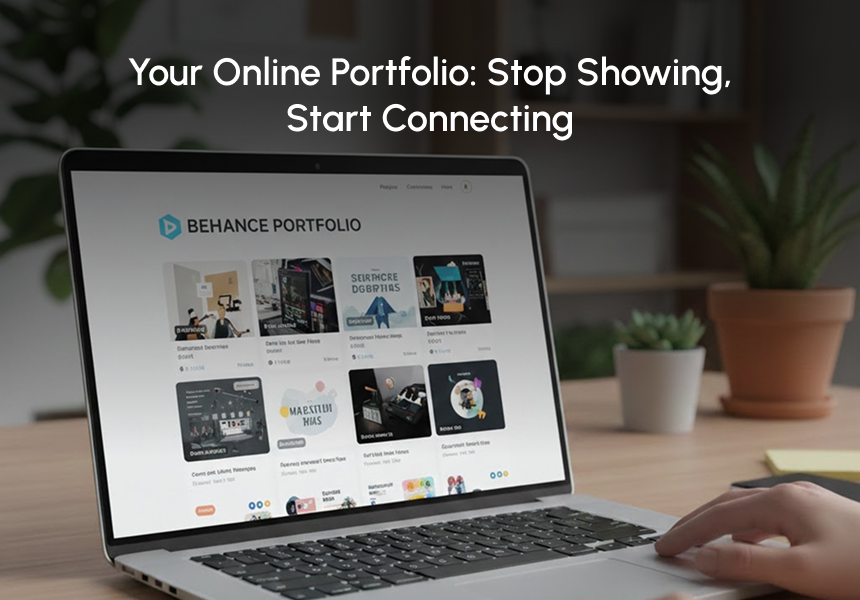
Your Online Portfolio: Stop Showing, Start Connecting
Let’s be honest. Sending a resume into the void feels hopeless sometimes. You know you’re more than a PDF. You have a story. You have proof.That’s where a great online portfolio changes everything. It’s not just a folder of work samples. It’s your chance to talk directly to a recruiter, to show your personality, and to make them think, “We need to meet this person.”
But most portfolios? They blend together. They’re forgettable.
Here’s how to build one that isn’t.
What's The Single Goal Your Portfolio Must Achieve?
Before you pick a template or write one word, get this right. Your personal website has one job: to get you a conversation. It’s not to get you the job on the spot. It’s not to show everything you’ve ever done.
Its purpose is to be so convincing and obvious that a recruiter wants to give you a call right away. Consider it your virtual handshake. Confidence. Clear. Memorable.
The 4-Part Formula That Actually Works
1. Forget "About Me"—write this instead.
Forget the bland bio. A compelling elevator pitch should be your first priority. It is, however, more seen than heard.
Give succinct answers to the following queries: What and with whom do you collaborate on?
Inequality: I have five years of expertise as a graphic designer.
Strong: "I create simple, approachable brands for healthcare startups that want to feel accessible."
See the difference? The second one makes me lean in. It shows focus. This is your first step in how to stand out to employers. It’s personal branding in action.
2. How to choose what stays and what goes.
The biggest error people make is this. Every project they have ever worked on is listed.
Avoid doing that.
Pick three to five of your greatest work samples. Quantity is never as good as quality. Tell a little story for each of them. Make things easy by using the STAR method:
- Situation: What was the issue or objective? (Just one sentence.)
- Task: What were you required to do?
- Action: What particular actions did you take? (This is your area of expertise.)
- Outcome: What took place? Use numbers if you can. 30% more traffic, lower customer complaints, and more client revenues
This is career storytelling. You're not listing duties. You're showing your ability to solve problems.
3. The Connection: Make it Easy for Them
There shouldn't be a dead end in your portfolio. It ought to serve as a central point of contact for the remainder of your professional life.
- Link to your LinkedIn profile: However, first, make sure you know how to build a LinkedIn profile that is consistent with the style of your portfolio. They must appear to be two parts of the same story.
- Provide alternatives on a clear "Contact" page. An email, a straightforward form, or even a calendar link for a brief conversation.
- Give an example of your process: A few pictures of you at work, a sketch from your journal, or a brief Loom video talking about a project. This provides a human element that robots cannot imitate.
4. The Vibe: Reflects You, Not Just the Template
Your creative portfolio needs to feel like you. A developer’s site might be minimalist and fast. An illustrator’s site should burst with color and life. Your message includes the layout, colors, and fonts.
It is not required to be complex. It has to be authentic.
Where Your Portfolio Fits In Your Whole Job Hunt
- Name it smart: Yourname.com is always best. It’s simple and professional.
- Keep it updated: An “updated 2 years ago” stamp is a killer. Treat it like a living document.
- Consider this from the perspective of a recruiter: Is it simple to use on a phone? Does it load quickly? Is your contact information clear?
- Get a second opinion: Have a buddy examine it. In ten seconds, can people tell what you do? Simplify if not.
How This Fits Into Your Bigger Career Picture
Your online portfolio isn’t alone. It’s part of your whole career toolkit.
- Use it when you apply for jobs. Put the URL right at the top of your resume templates and cover letter templates.
- When you’re learning how to network for a job, your portfolio is your best follow-up. After a chat, you can say, “I actually have a project on my site that relates to what you mentioned. Here’s the link.”
- It makes your personal branding tips real. You’re not just talking about being a pro—you’re showing it.
Before you go live, run it through an ATS checker. Some sites let you see if the text parts of your portfolio are readable by the software companies use. Also, look at strong resume examples and cover letter examples to make sure your messaging is consistent everywhere.
The Real Truth No One Says
A perfect portfolio that never gets seen is useless. So once it’s live, you have to share it.
Update your LinkedIn with the link. Share your best project in a thoughtful post. Mention it when you help someone in a forum.
Your online portfolio is your home base. You must now extend invitations to others.
Putting yourself out there might be frightening. What happens if nobody enjoys it? But what’s the alternative? Staying invisible?
Build it. Refine it. Then share it. That’s how conversations—and jobs—begin.
Start with one project. Just one. Get it up there. The rest will follow. You’ve got this
Conclusion
Keep in mind that your portfolio serves as a discussion starter. The correct folks will want to talk if it's straightforward and nice.
Avoid aiming for perfection. Strive for excellence. The ideal type of portfolio is one that is straightforward and honest.
Frequently Asked Questions (FAQ’s)
Why do I even need an online portfolio?
To show your work is real, not just list it on a resume.
I'm not a designer; do I still need one?
Yes, anyone with work samples (writing, plans, reports) benefits from one.
What's the most important thing to include?
Your 3-5 best projects with a short story for each.
How many projects should I show?
3 to 5 is the sweet spot—enough to show skill, not so many it's overwhelming.
What if my work is confidential?
Describe the project generally and focus on your process and the skills you used.
Related Posts




27 Jan, 2026

